

 Español
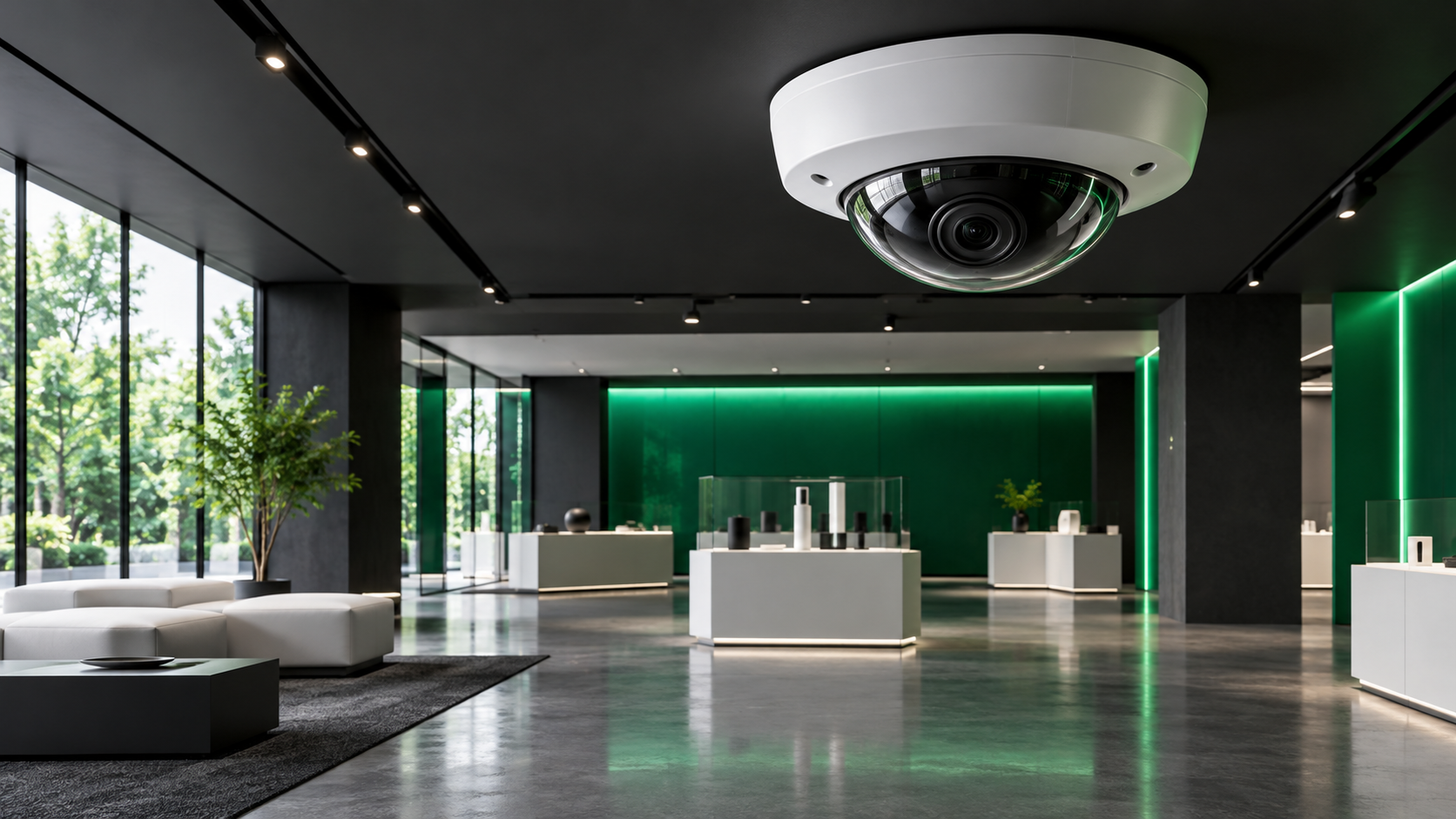
A fisheye camera can provide a broad overview from one position. The useful question is not simply how much space appears in the image, but whether the people and objects that matter remain clear enough for the task. [1]
Choose the observation point
Review the mounting position, room layout and areas that require detail. A wide image spreads the available pixels across the scene; it is not automatically a substitute for several cameras aimed at specific targets.
Review the viewing modes
Ask which panoramic or corrected views the camera and recorder support. Test live view and saved playback, including the image edges, rather than evaluating only a still image from the center.
Keep historical specifications in context
The 2016 announcement described a 4K camera with a 1.6 mm lens, SD recording, night illumination and audio input. Those details refer to the product discussed at that time. Confirm the current model’s datasheet before using them in a new specification.
Sources and resources
[1] Shield Technology — Fisheye Lens 360 Camera (2016-11-23). Historical article; revised for clarity and to distinguish legacy information from current guidance.